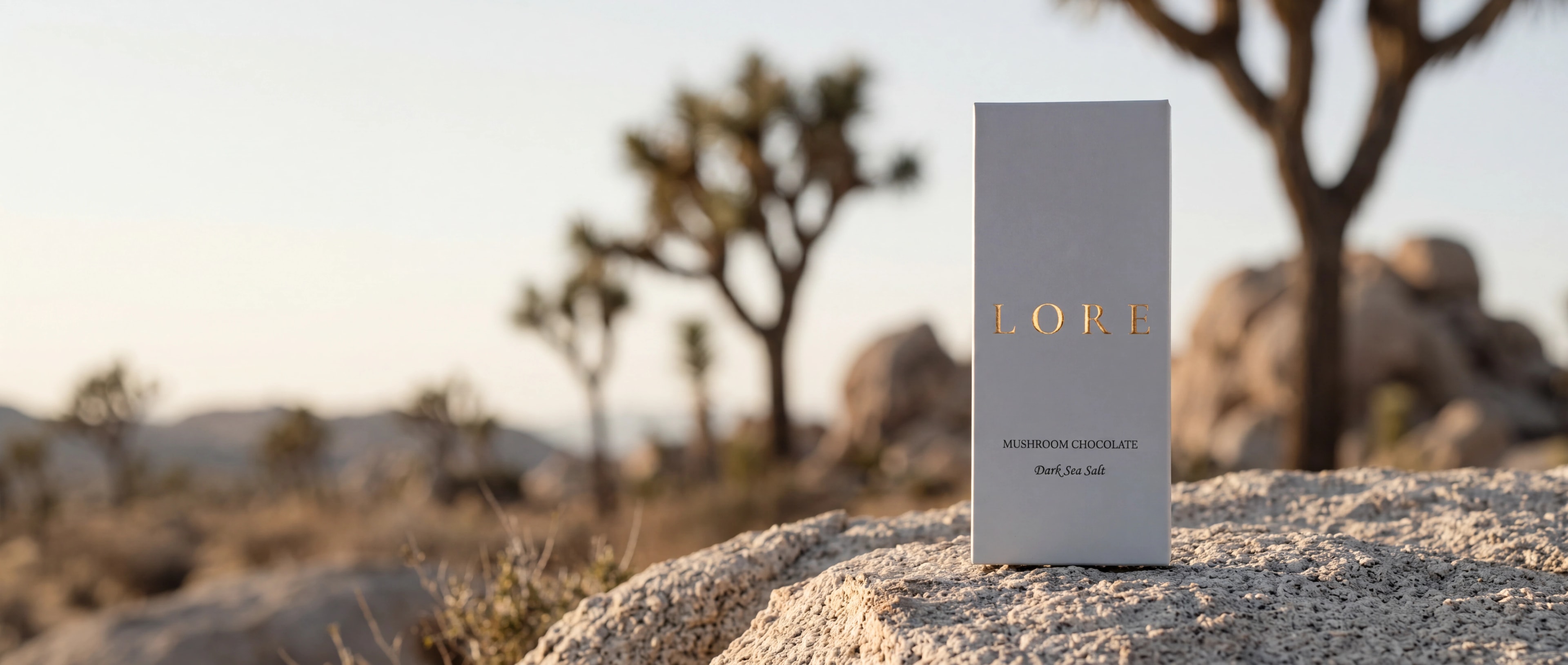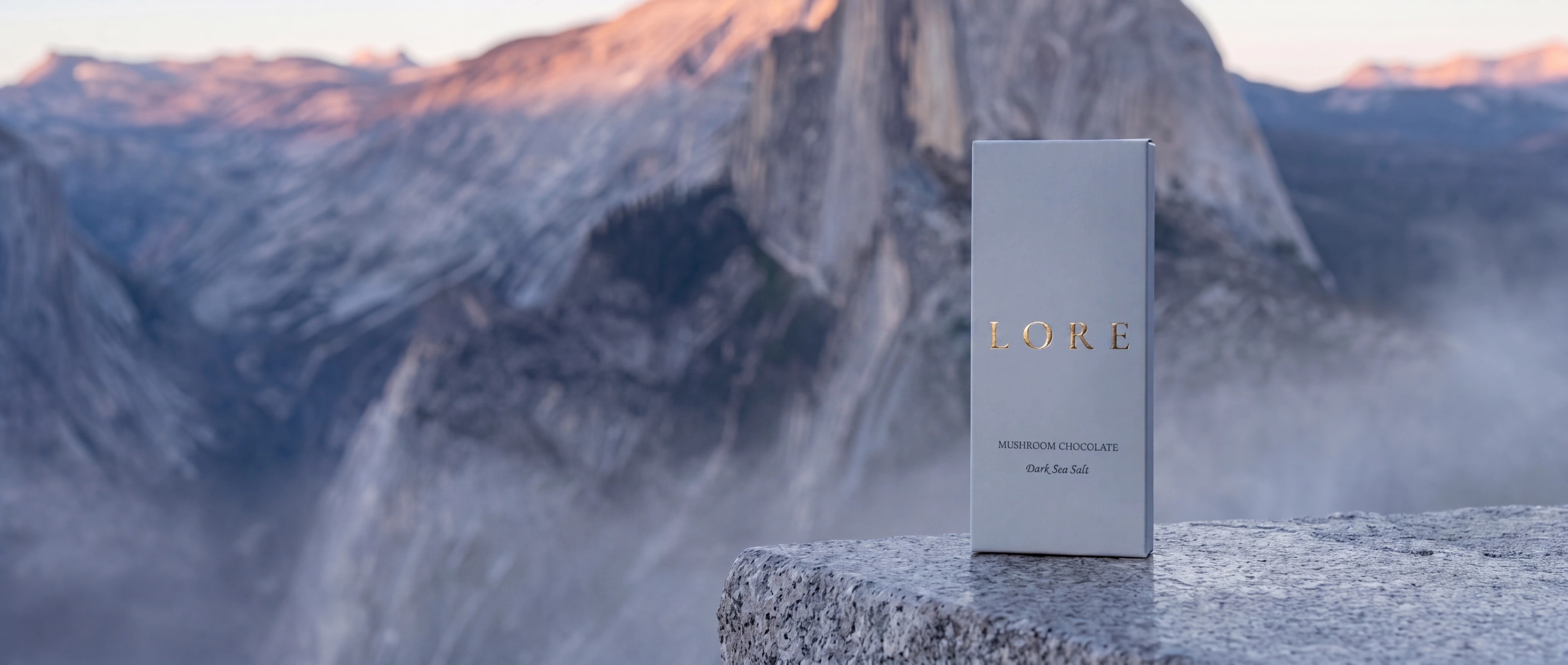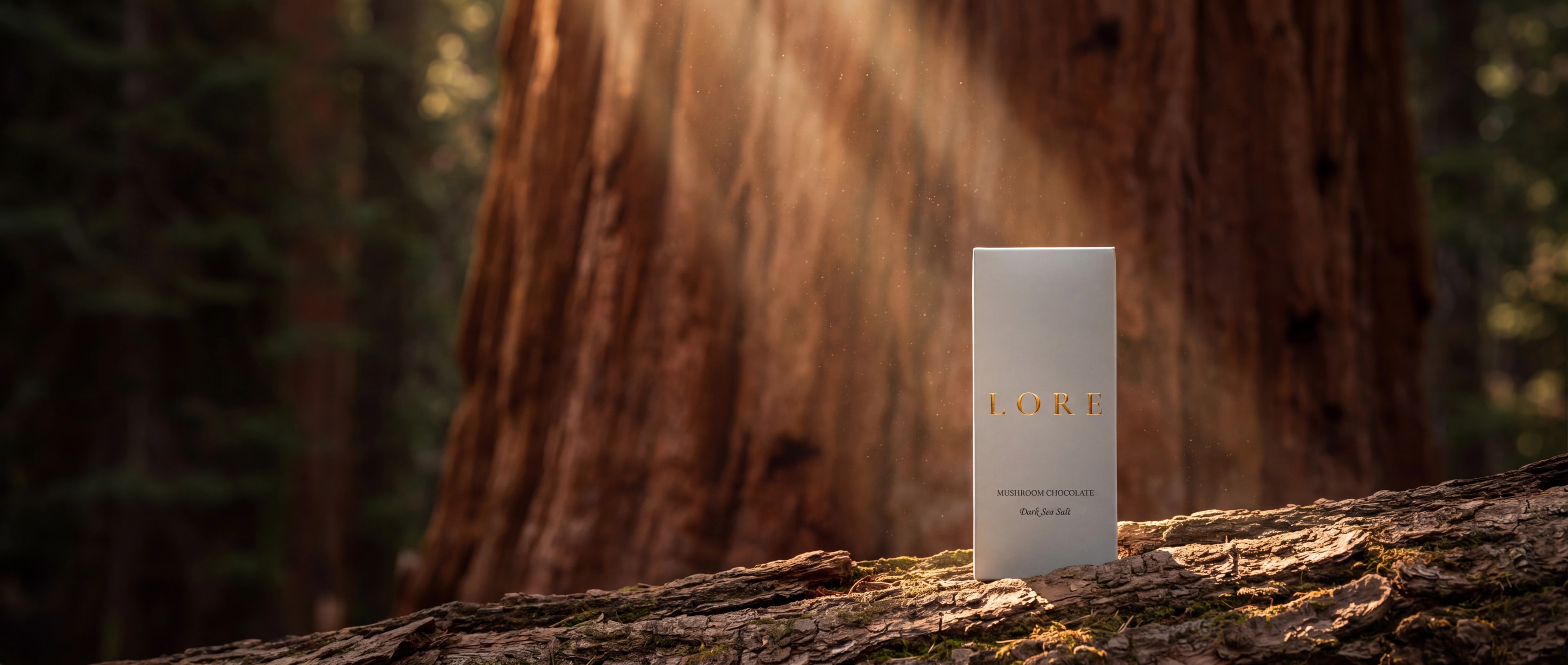
A giant sequoia doesn't acknowledge you. It was here two thousand years before the shoot and it will outlast every brand that ever photographs it. Working at the foot of the Giant Forest recalibrates what "long-term" means in a way no spreadsheet can.
The forest floor is where our subject actually lives, though. Fungi run the place — mycelial networks moving nutrients between trees, decomposers turning fallen giants back into soil. A functional mushroom bar photographed in Sequoia is standing in its own supply chain.
The long game, literally
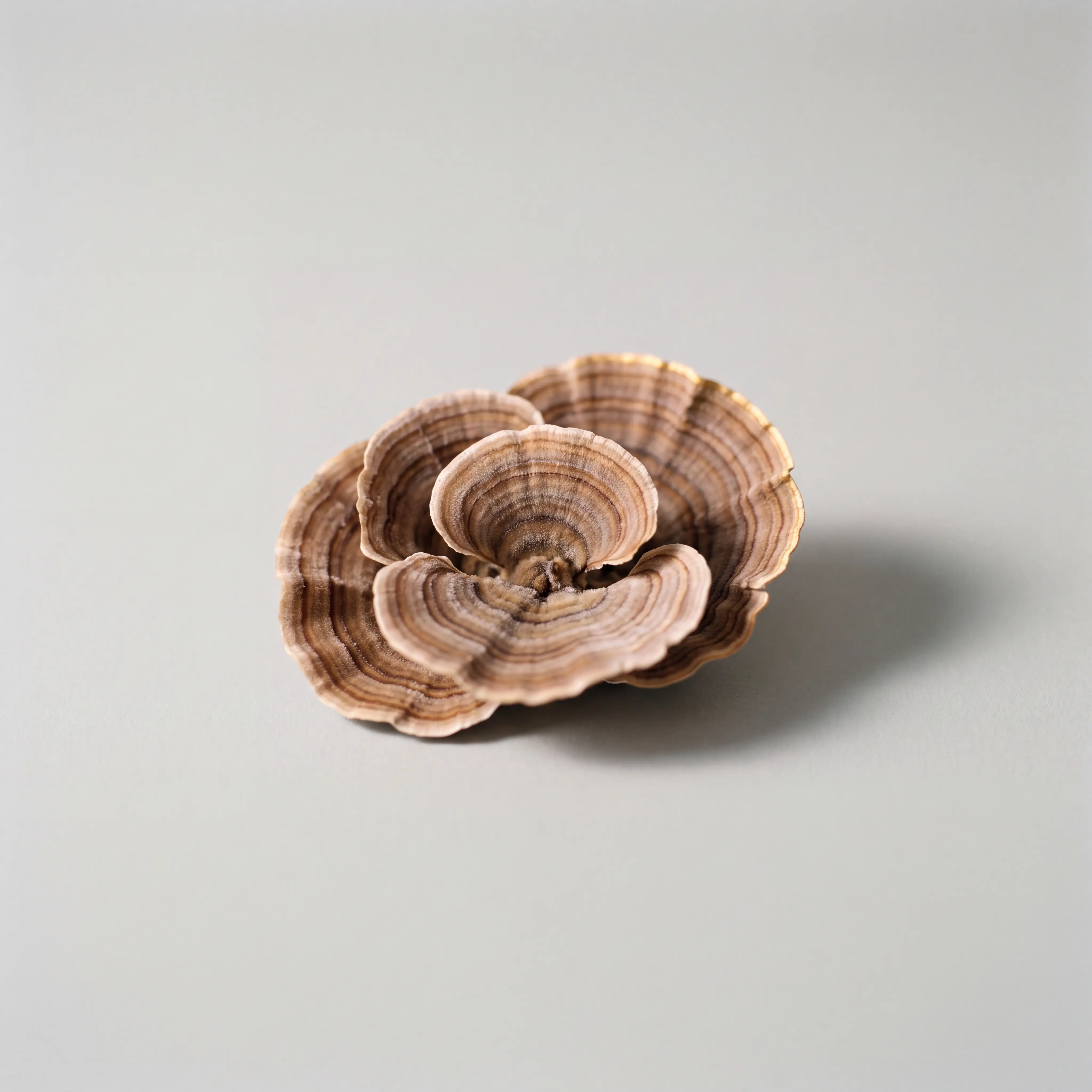
Turkey Tail and Chaga — the bar's two forest-floor mushrooms — both work on old-growth time. Chaga takes years to form its conk; Turkey Tail's research literature took half a century to accumulate. Old growth teaches the same lesson the bar is scored for: nothing meaningful compounds in a day.
A bar of forest-floor mushrooms, photographed in its own supply chain.
Common questions
What do fungi do in old-growth forests?
They run the nutrient economy: mycelial networks transport water and nutrients between trees, and decomposer fungi like Turkey Tail return fallen wood to soil. Functional mushrooms are literally forest infrastructure.
Which LORE mushrooms grow in forests like Sequoia?
Turkey Tail grows on fallen logs in almost every temperate forest on earth, and Chaga on birches across the boreal north. Lion's Mane grows on hardwoods; Reishi on hardwood stumps and roots.
These statements have not been evaluated by the Food and Drug Administration. LORE is a food, not a medicine — this article is for general information and is not medical advice. This product is not intended to diagnose, treat, cure, or prevent any disease.