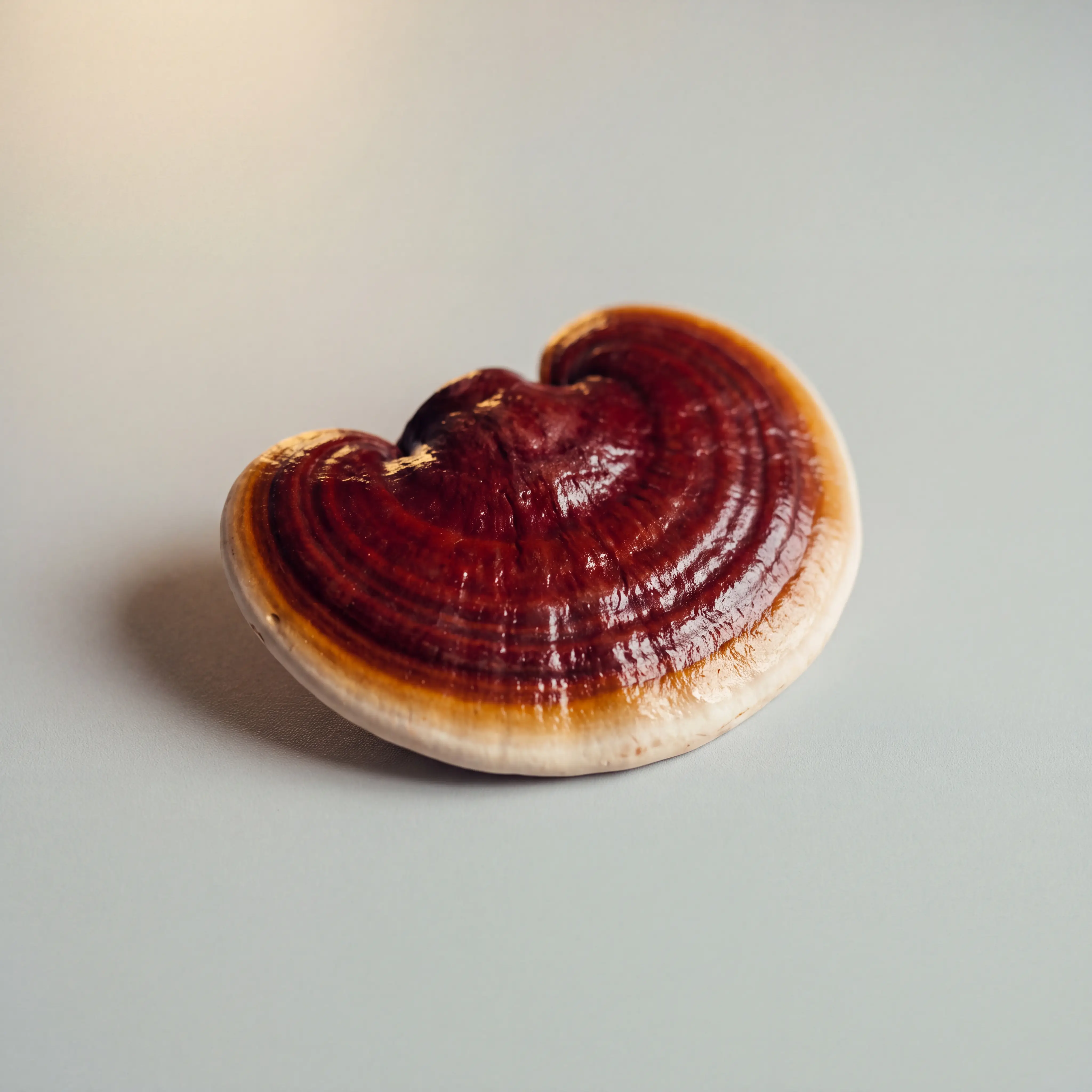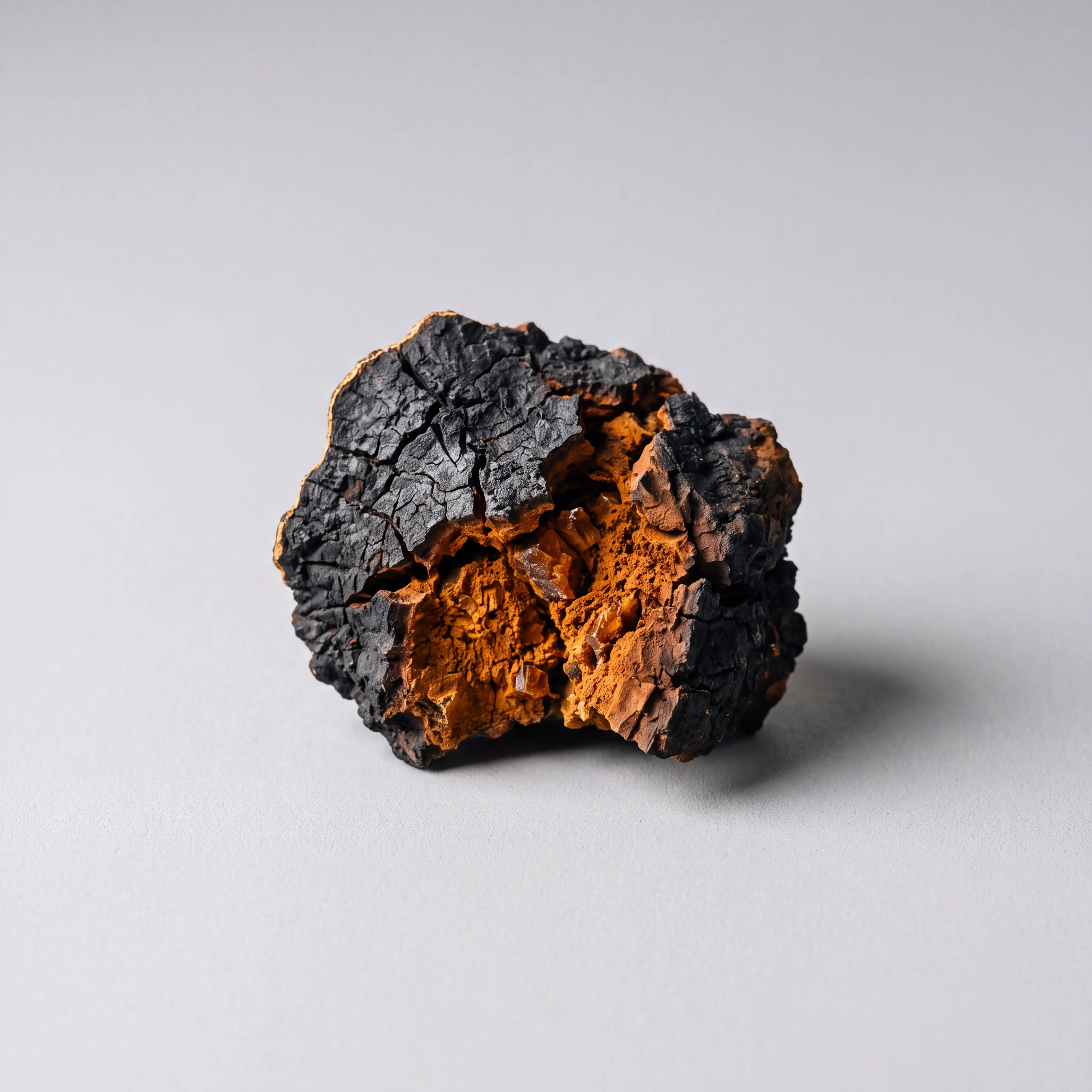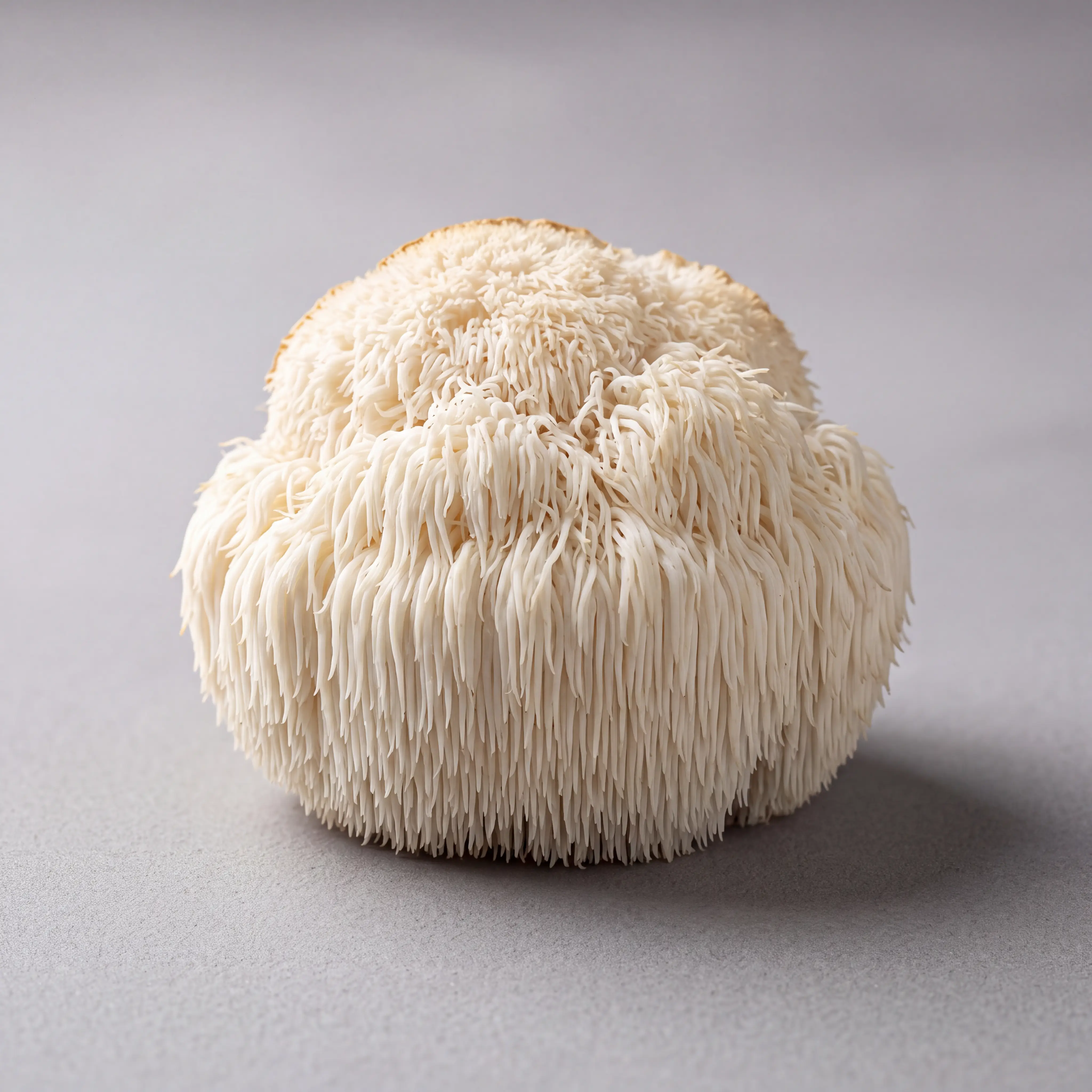
Lion's Mane (Hericium erinaceus) doesn't look like a mushroom so much as a waterfall — a cascade of soft white spines that grows on hardwoods across North America, Europe and Asia. In Traditional Chinese Medicine it has been brewed for centuries under the name hóu tóu gū; Buddhist monks are said to have taken it as a tea before long sits of meditation.
It is the first mushroom people usually mean when they talk about "functional" fungi, and it is the first of the four in every LORE square.
What the research looks at
Lion's Mane is studied for two families of compounds found almost nowhere else: hericenones (concentrated in the fruiting body) and erinacines (in the mycelium). In laboratory and animal studies, both have been observed to stimulate the synthesis of nerve growth factor (NGF), a protein involved in the maintenance of neurons.
Human research is younger and smaller, but pointed in an interesting direction: small placebo-controlled trials in older adults with mild cognitive complaints have reported improved cognitive scores over 8–16 weeks of daily intake, with scores drifting back after stopping. Other small studies have looked at mood and sleep quality with encouraging, preliminary results.
The honest summary: promising early evidence, not settled science. Nobody serious claims Lion's Mane is a cognitive cure — what the research supports is a well-tolerated food with a plausible, actively studied mechanism.
Why it's in the bar
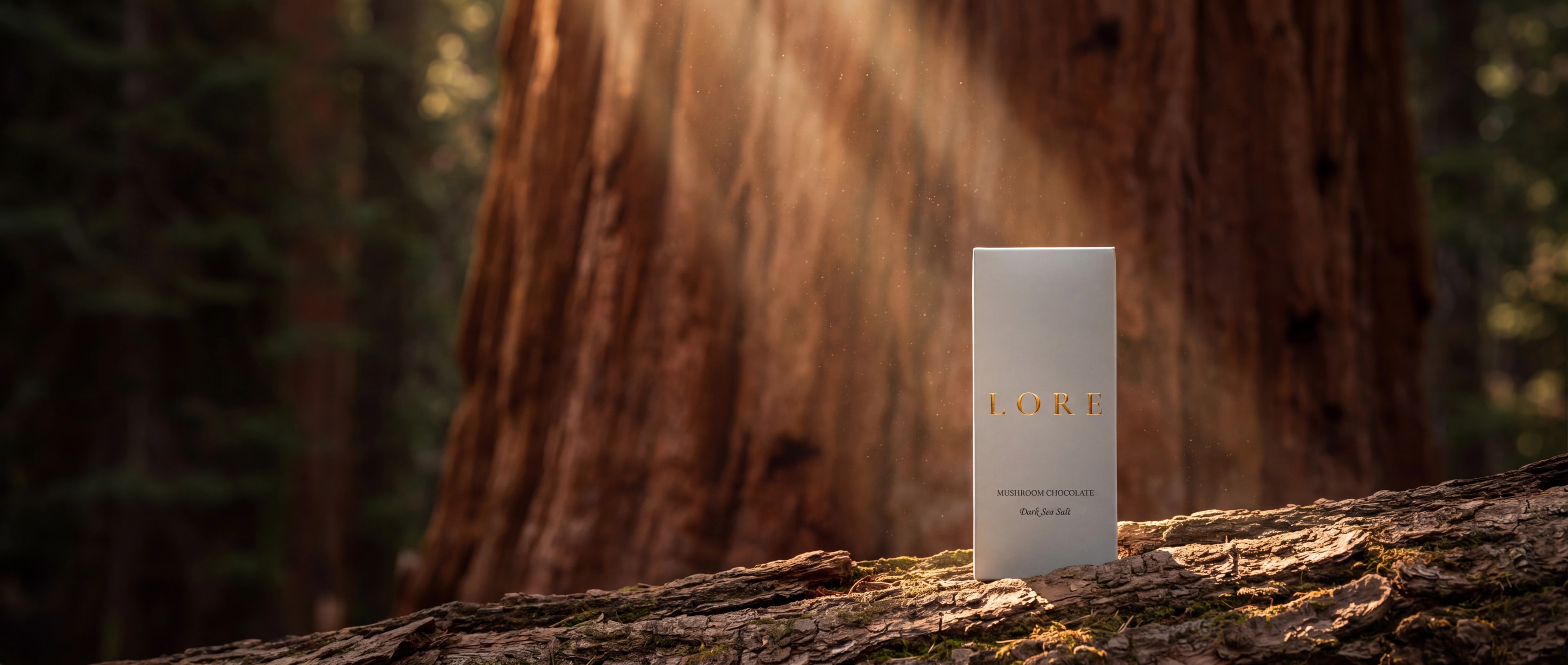
LORE uses organic fruiting-body extract — the part of the mushroom the hericenone literature is actually about — folded into dark chocolate at ~0.45g per square alongside Reishi, Chaga and Turkey Tail.
Chocolate is not a disguise here; it's the delivery. Cacao's own compounds (theobromine, flavanols) pair naturally with a mushroom taken for clear-headed mornings. Break a square, take it slowly, and let the ritual do the framing.
Promising early evidence, not settled science — a food with a mechanism worth studying.
Common questions
Is Lion's Mane psychoactive or psychedelic?
No. Lion's Mane (Hericium erinaceus) is a culinary mushroom with no psilocybin and no intoxicating effect. It is legal, non-psychoactive, and sold as a food. LORE bars are functional, not psychedelic.
What does Lion's Mane do for focus?
Lion's Mane contains hericenones and erinacines, compounds studied for stimulating nerve growth factor (NGF) synthesis in laboratory models. Small human trials have reported improved cognitive scores with daily use over 8–16 weeks. Evidence is early and ongoing — it is studied for focus and memory support, not proven as a treatment.
How much Lion's Mane is in a LORE square?
Each LORE square is ~0.45g of dark chocolate blended with a four-mushroom extract of Lion's Mane, Reishi, Chaga and Turkey Tail. Most people take one square in the morning as a ritual with coffee or tea.
Does Lion's Mane taste like mushrooms in chocolate?
Barely. Fruiting-body extract is mild and slightly savory; against 70% dark chocolate and sea salt it reads as depth, not as mushroom.
These statements have not been evaluated by the Food and Drug Administration. LORE is a food, not a medicine — this article is for general information and is not medical advice. This product is not intended to diagnose, treat, cure, or prevent any disease.