No mushroom carries more cultural weight than Reishi (Ganoderma lucidum). In China it is língzhī — the "herb of spiritual potency" — painted into imperial art, carved into temple furniture, reserved for emperors when wild specimens were vanishingly rare. Taoist tradition filed it under elixirs; the Bencao Gangmu, the great 16th-century pharmacopoeia, catalogued it centuries ago.
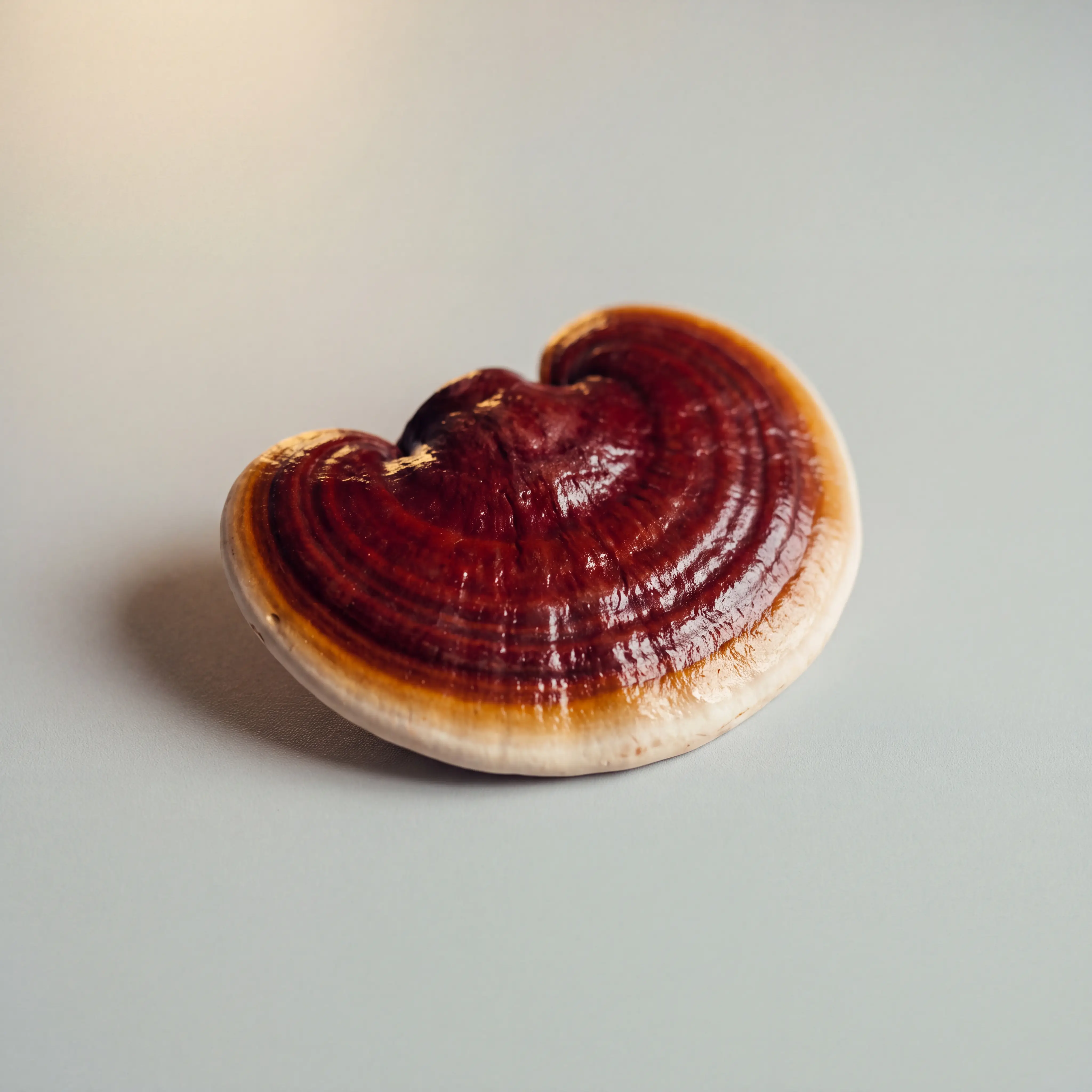
The mushroom itself is a glossy, kidney-shaped bracket the color of lacquered mahogany. It is woody and intensely bitter — nobody eats Reishi for pleasure, which is exactly why it has always been taken as teas, decoctions and extracts.
What the research looks at
Reishi's studied compounds are triterpenes (the bitterness — ganoderic acids among them) and beta-glucan polysaccharides. Together they're the reason Reishi appears in research on stress response, sleep quality and immune modulation.
Human trials are small but consistent in theme: studies have reported reduced fatigue scores and improved well-being measures over 4–8 weeks. Beta-glucans, shared across the functional mushrooms, are studied for how they interact with immune cell receptors. As with all of this category: signal, not settled proof.
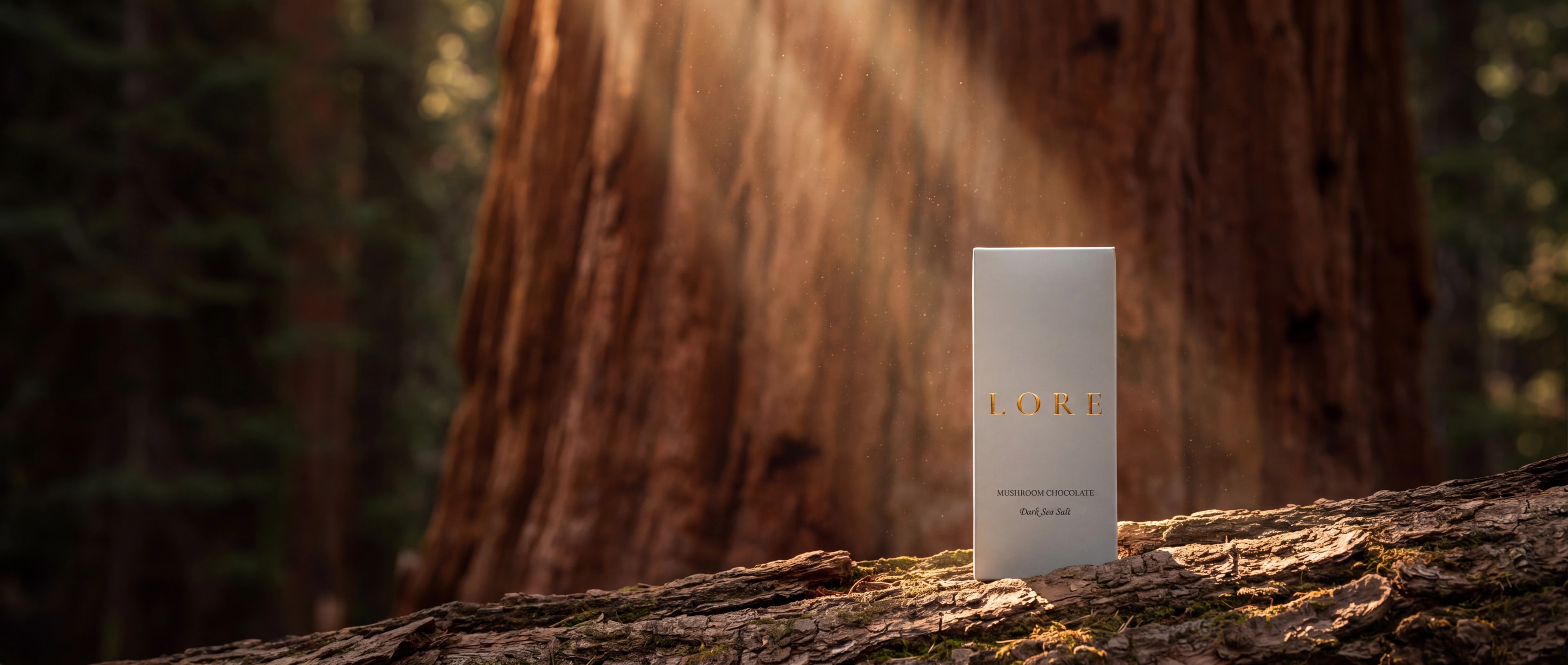
Reishi is the evening half of LORE's temperament — where Lion's Mane points toward sharpness, Reishi points toward settling. In the bar they balance.
Why it's in the bar
Dark chocolate is the one food that genuinely flatters Reishi: cacao's own bitterness gives the triterpenes somewhere to hide, and sea salt rounds what remains. One square in the late afternoon is the way most people find it.
Two thousand years of reverence, one honest reading: settle, don't sedate.
Common questions
Is Reishi psychoactive?
No. Reishi (Ganoderma lucidum) contains no psilocybin and has no intoxicating effect. It is a legal culinary-medicinal mushroom taken as food. LORE bars are functional and non-psychoactive.
What is Reishi traditionally used for?
In Traditional Chinese Medicine, Reishi (língzhī) has been used for over two thousand years in preparations associated with vitality, calm and longevity. Modern research studies its triterpenes and beta-glucans in the context of stress, sleep quality and immune modulation — evidence is early and ongoing.
Does Reishi make you sleepy?
Reishi is not a sedative. Studies look at stress and sleep quality over weeks of regular use, not acute drowsiness. Most people describe the effect — if they notice one — as settling rather than sleep-inducing.
Why does Reishi taste bitter?
Its ganoderic acid triterpenes are intensely bitter. In a LORE square, 70% dark chocolate absorbs that bitterness so Reishi reads as depth rather than medicine.
These statements have not been evaluated by the Food and Drug Administration. LORE is a food, not a medicine — this article is for general information and is not medical advice. This product is not intended to diagnose, treat, cure, or prevent any disease.